Part of SRM Group of Institutions
  • Get Connected
  • Get Social

Department of

Electrical & Electronics Engineering

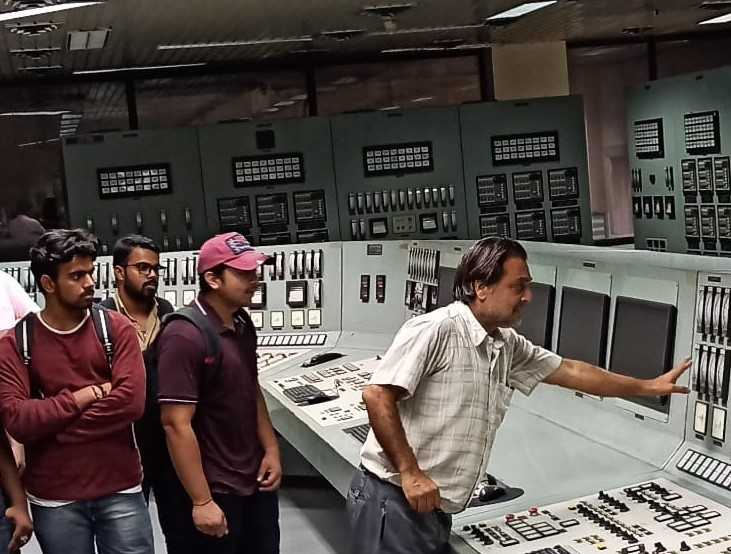
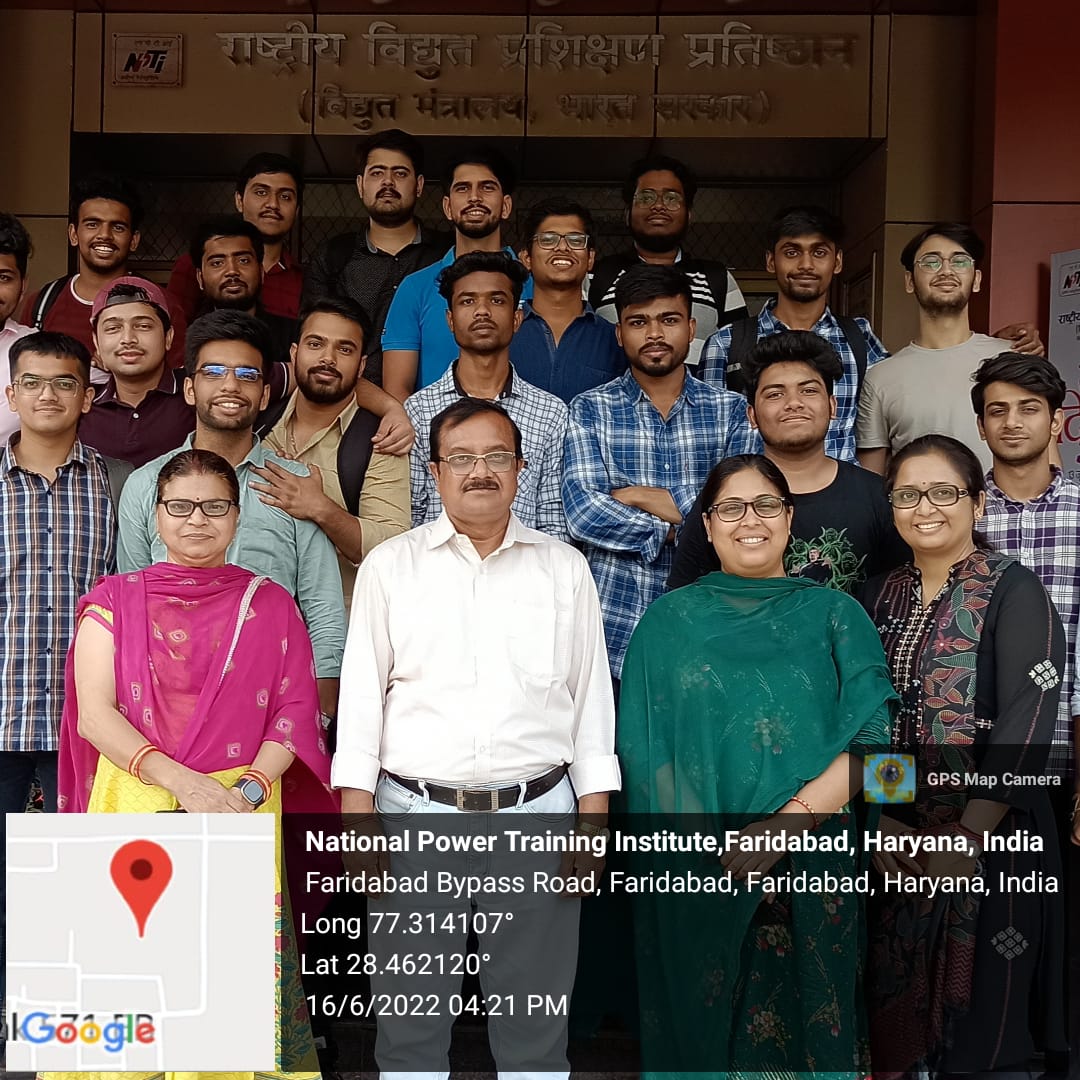
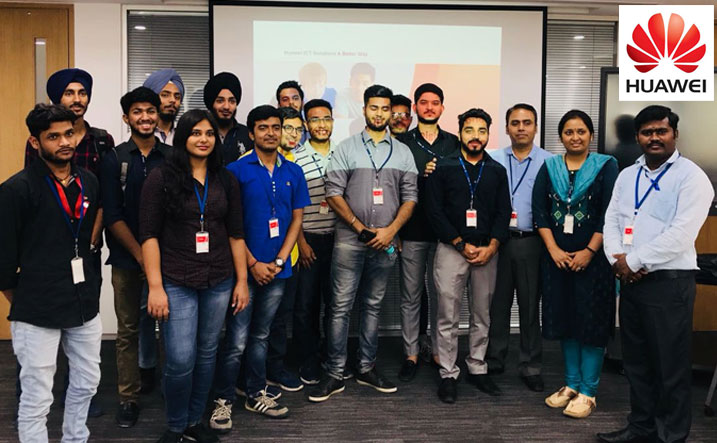
Electrical & Electronics Engineering is a dynamic and rapidly growing field that brings various career opportunities in dual areas such as electric power generation, transmission, distributions, switch gears and circuits, robotics and control, computer hardware, and much more. The Department of Electrical and Electronic Engineering at SRMUH believes in the multidimensional growth of all students, industrial visits, and regular internships which assist students in a smooth transition from academic life to work-life a regular feature of our department. The department has extensive partnerships and collaborations with foreign universities for technology up-gradation. This activity helps to stay abreast with the latest technologies in the field of electrical engineering. This department is highly qualified and dedicated faculty members having experience in both industries and academia. With specialized laboratories in all important areas of Electrical Engineering such as Power Systems, Machines, Power Electronics & Drives, Control & Automation, and measurements, this department works in the direction of nurturing the faculties and exposing them to world-class infrastructure.

VALUE ADDED COURSES

Matlab

Labview

Orcad

Multisim

Personality Development

Value Education

LABORATORIES

Electrical Machines Lab - 1

Electrical Machines Lab - 2

Electric Circuits Lab

Electronics and instrumentation Lab

Measurements and Control Lab

Power Electronics Lab

ARE YOU AN INCOMING STUDENT ?

Centre of Excellence on Smart Grid and Data Analytics (CoE-SGDA) Funded by HSCC (India) Limited

The Centre of Excellence (CoE) on Smart Grid and Data Analytics has been established to promote advanced research, innovation, skill development, and industry-academia collaboration in the domains of modern power systems, smart grid technologies, and data-driven energy management. The Centre serves as a multidisciplinary platform that integrates electrical engineering, artificial intelligence, machine learning, Internet of Things (IoT), cybersecurity, and big data analytics to address emerging challenges in the energy sector.

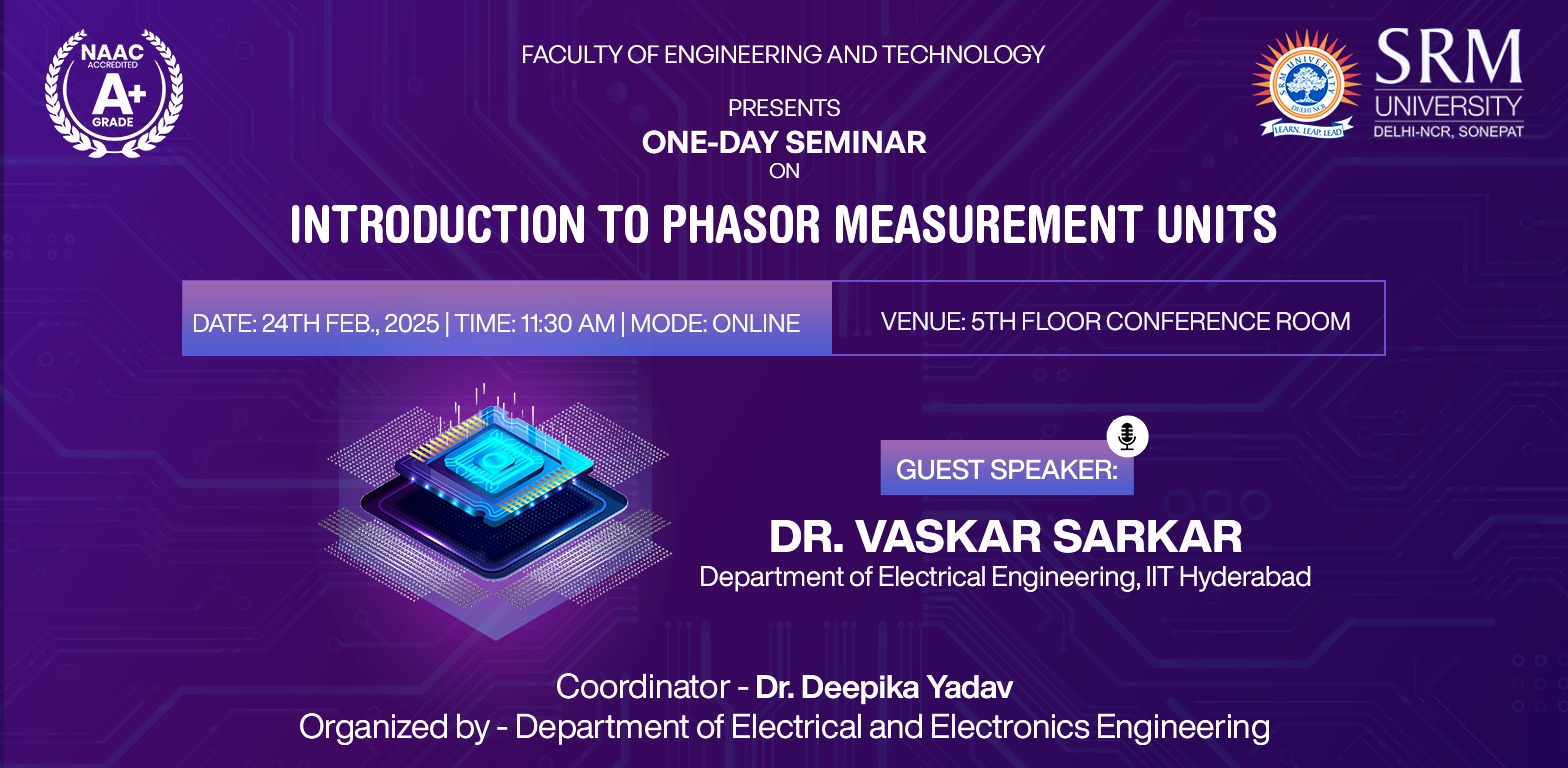
The Centre focuses on developing intelligent solutions for power generation, transmission, distribution, and consumption through real-time monitoring, predictive analytics, demand-side management, renewable energy integration, and grid resilience enhancement. It provides students, researchers, and faculty members with opportunities to work on cutting-edge technologies such as Advanced Metering Infrastructure (AMI), Phasor Measurement Units (PMUs), digital substations, energy forecasting, fault diagnosis, and smart energy management systems.

Equipped with modern computational and simulation tools, the Centre facilitates research projects, consultancy activities, training programs, workshops, and industry-oriented certification courses. It actively collaborates with industries, utilities, government agencies, and research organisations to foster innovation and develop sustainable solutions for future energy systems.

The Centre aims to create a skilled workforce capable of contributing to the digital transformation of power networks while supporting national initiatives related to smart cities, renewable energy integration, energy efficiency, and sustainable development. Through its research and educational activities, the Centre strives to become a leading hub for excellence in smart grid technologies and data analytics.

To become a nationally recognized centre for innovation, research, and capacity building in smart grid technologies and data-driven energy systems, contributing to India's transition toward sustainable and intelligent energy infrastructure.

  • Promote cutting-edge research in smart energy technologies.
  • Foster interdisciplinary collaboration among academia, industry, and government agencies.
  • Develop skilled professionals capable of addressing future energy challenges.
  • Support sustainable development through innovative energy solutions.
  • Smart Grid Technologies and Automation
  • Power System Monitoring and Control
  • Artificial Intelligence and Machine Learning for Power Systems
  • Energy Data Analytics and Forecasting
  • Renewable Energy Integration
  • IoT Applications in Smart Grids
  • Cybersecurity in Power Networks
  • Demand Response and Energy Management
  • Digital Twin and Predictive Maintenance
  • Smart Metering and Advanced Analytics

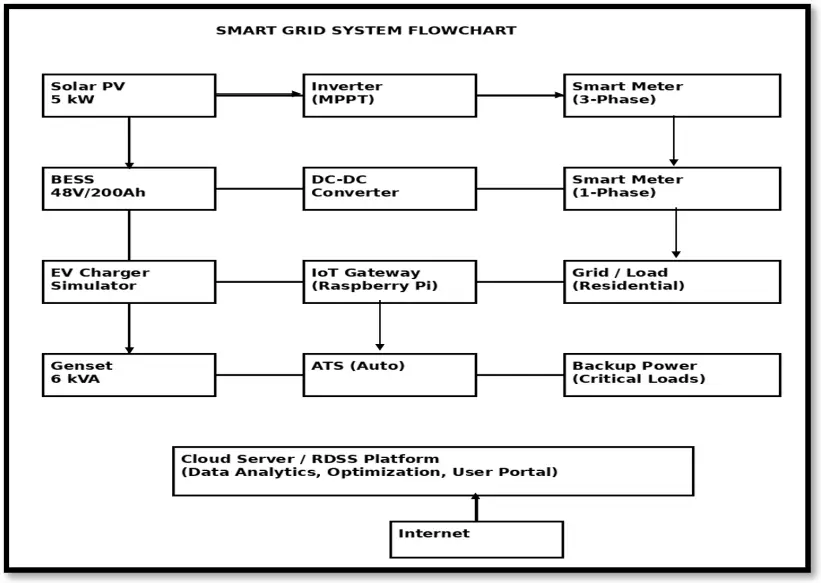
The Centre features a dedicated research laboratory equipped with:

  • Grid-connected Solar PV System
  • Smart Metering Infrastructure
  • Battery Energy Storage System
  • IoT-enabled Data Acquisition Platform
  • Cloud-based Energy Monitoring System
  • Advanced Data Analytics Workstations
  • Real-time Energy Management Dashboard
  • High-speed Communication and Network Infrastructure
  • Applied Research and Development
  • Industry-Sponsored Projects
  • Prototype Development and Testing
  • Faculty and Student Research Training
  • Workshops, Seminars, and Certification Programs
  • Consultancy Services for Smart Energy Solutions
  • Industry-Academia Collaborations
Name of the Project Funding Agency Amount in Rs. Investigators Duration Project Status
Assessing the Impact of Smart Grid Data Analytics on Demand Response and Economic Viability for Residential Buildings in India HSCC (India) Limited
(A Government of India Enterprise)
54,91,255 Principal Investigator:
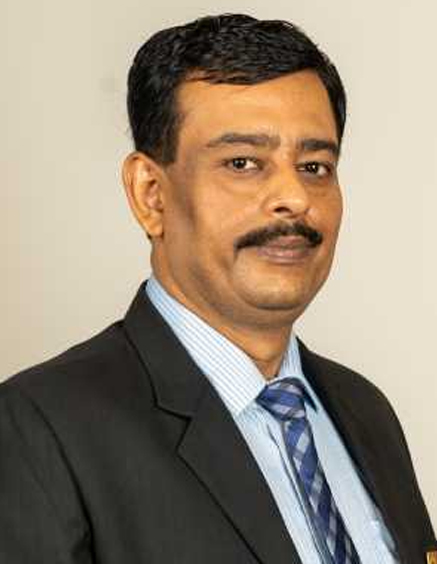
Dr. Ranjit Roy

Co-Investigator:
Dr. Deepika Yadav
01.04.2025
to
31.03.2026
Completed
Sustainable Smart Village: AI-Controlled Hybrid Storage Solutions for Rural Microgrids HSCC (India) Limited
(A Government of India Enterprise)
52,62,800 Principal Investigator:
Dr. Ranjit Roy

Co-Investigator:
Dr. Deepika Yadav
01.04.2026
to
31.03.2027
Ongoing

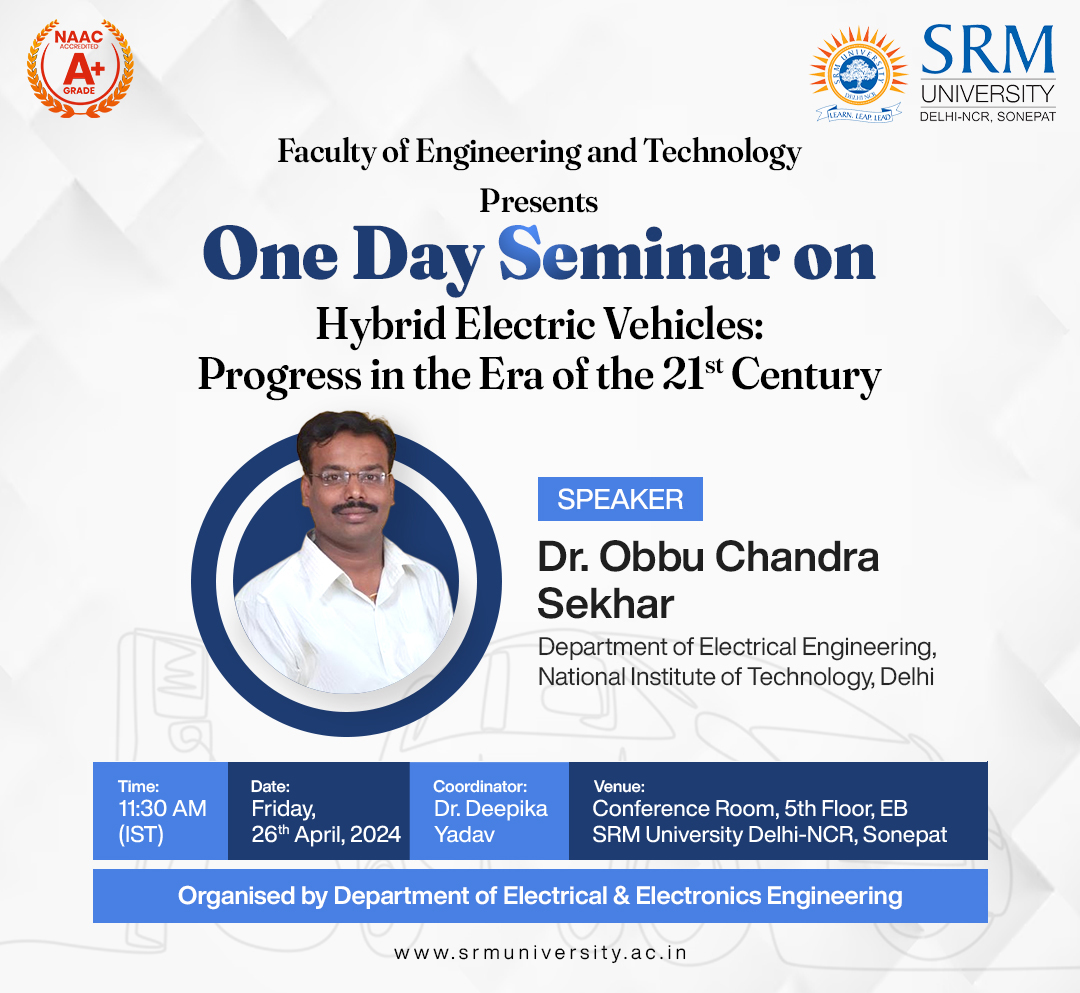
Seminars / Workshops / Expert Talks Organized by the Department

Sr. No. Date Event / Programme Duration Resource Person Coordinator
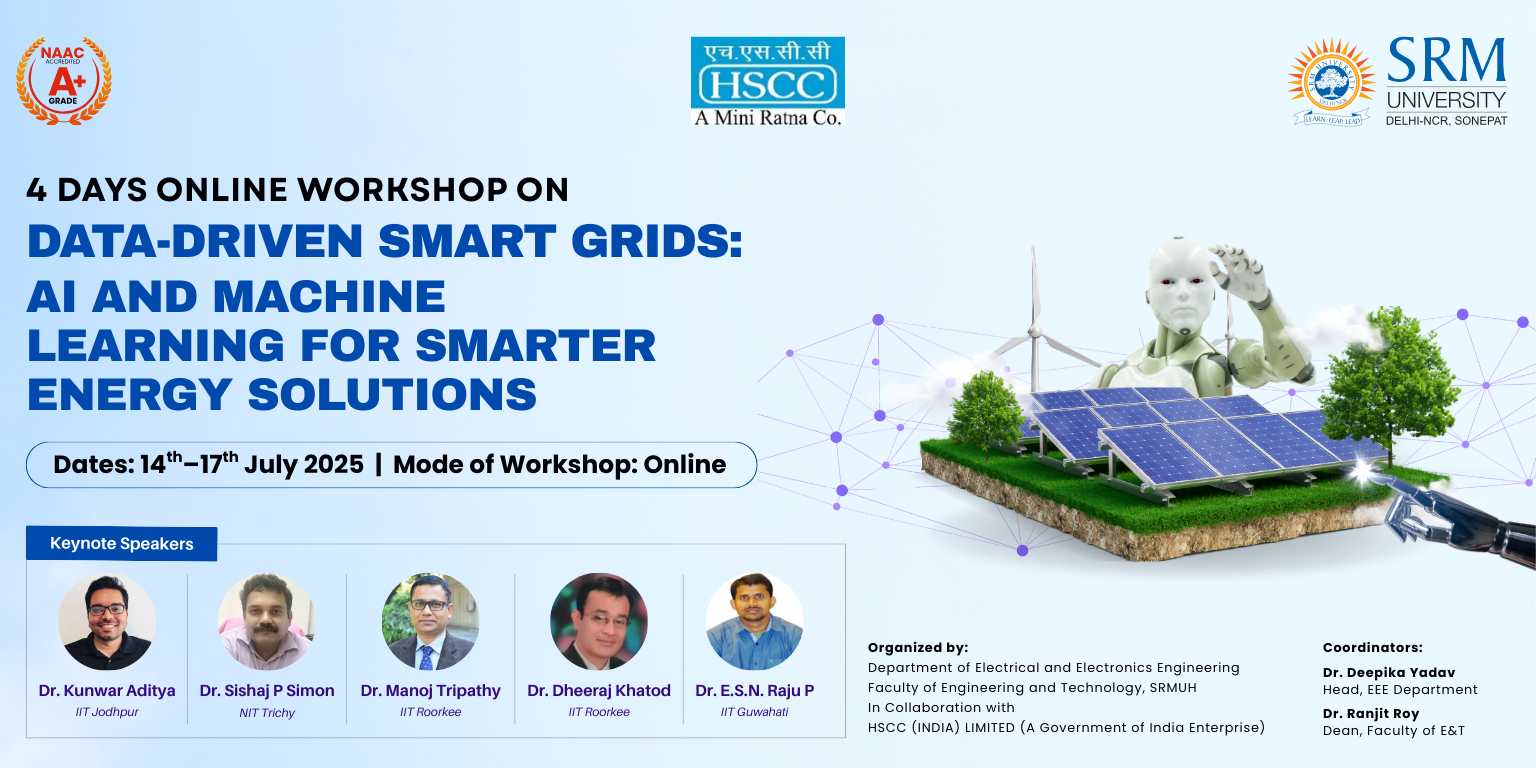
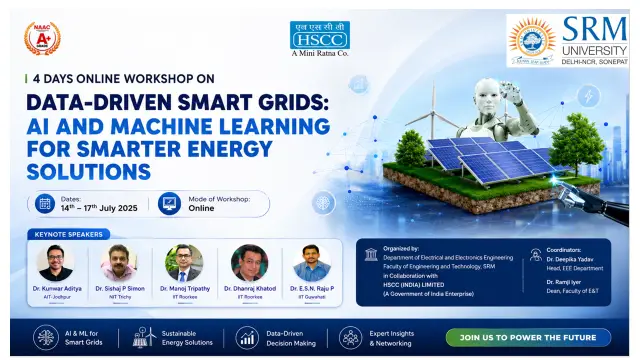
1 14-07-2025
to 17-07-2025
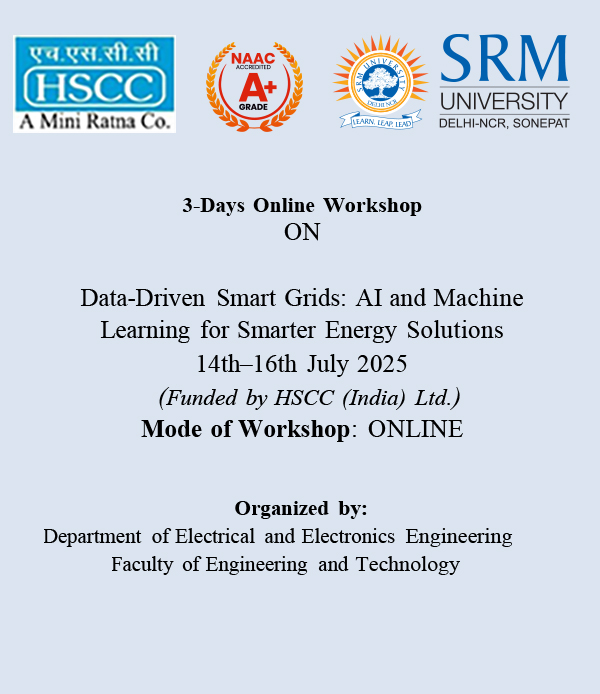
Data-Driven Smart Grids: AI and Machine Learning for Smarter Energy Solutions 4 Days Dr. Kunwar Aditya, IIT Jodhpur
Dr. Sishaj P Simon, NIT Trichy
Dr. Manoj Tripathy, IIT Roorkee
Dr. Dhanraj Khatod, IIT Roorkee
Dr. E.N. Raju P, IIT Guwahati
Dr. Deepika Yadav
2 23-08-2025 Next-Generation Smart Grid and Energy Management 1 Day Dr. Prabodh Bajpai, IIT Kanpur
Dr. Siba Kumar Patro, IIT Roorkee
Dr. Deepika Yadav
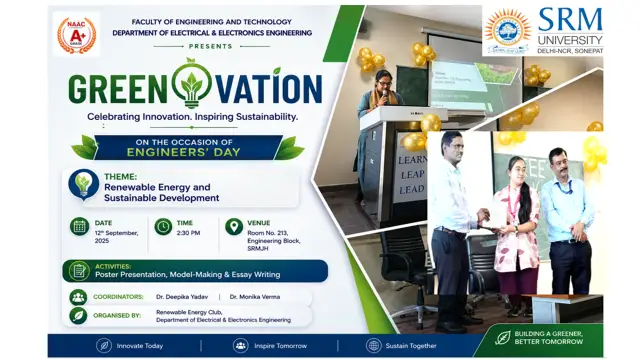
3 12-09-2025 GREENOVATION – A Technical Competition 1 Day Renewable Energy Club Dr. Deepika Yadav
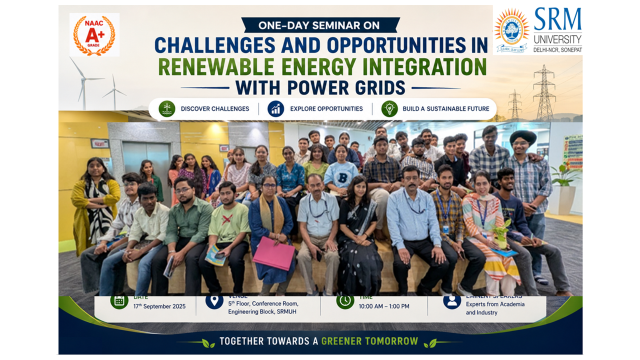
Dr. Monika Verma
4 17-09-2025 Challenges and Opportunities in Renewable Energy Integration with Power Grids 1 Day Dr. Satakshi Sharma Jha,
Delhi Technological University, Delhi
Dr. Deepika Yadav
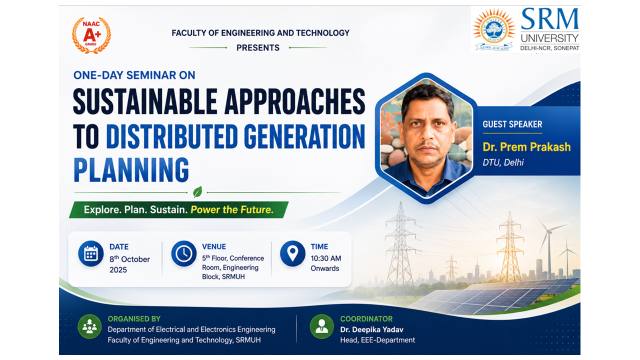
5 08-10-2025 One-Day Seminar on Sustainable Approaches to Distributed Generation Planning 1 Day Dr. Prem Prakash,
Delhi Technological University, Delhi
Dr. Deepika Yadav
6 05-01-2026
to 09-01-2026
Faculty Development Programme on "Intelligent Engineering Approaches: Artificial Intelligence, Machine Learning, IoT, and Key Research Directions" 5 Days Dr. Preeti Verma, NIT Delhi
Dr. Karan Nathwani, IIT Jammu
Dr. Ujjwal Kalla, NIT Delhi
Dr. Gunjan, NIT Delhi
Dr. Deepika Yadav
7 27-01-2026
to 29-01-2026
India Energy Week 2026 - Urja Sankalp: Theme: Net Zero 2047 1 Day Renewable Energy Club Dr. Deepika Yadav
9 11-02-2026
to 12-02-2026
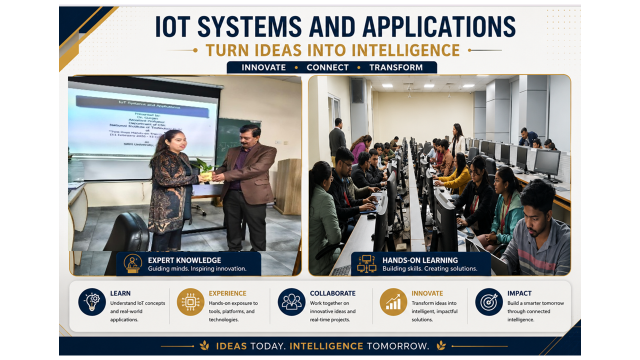
IOT Systems and Applications – Turn Ideas Into Intelligence 2 Days Dr. Gunjan, NIT Delhi Dr. Deepika Yadav
10 17-02-2026 One-Day Webinar on "Integrated Solar Hybrid Energy Systems for Decentralised Rural Electrification" 1 Day Dr. Dipankar Debnath, IIT Kharagpur Dr. Deepika Yadav
11 20-02-2026 Educational Visit to India AI Impact Summit-2026 1 Day Renewable Energy Club Dr. Deepika Yadav
12 27-02-2026 Influence of EV Charging and Distributed Generation on Distribution System Power Quality 1 Day Dr. Shimi Sudha Letha, Indian Naval Academy, Kannur, Kerala Dr. Deepika Yadav
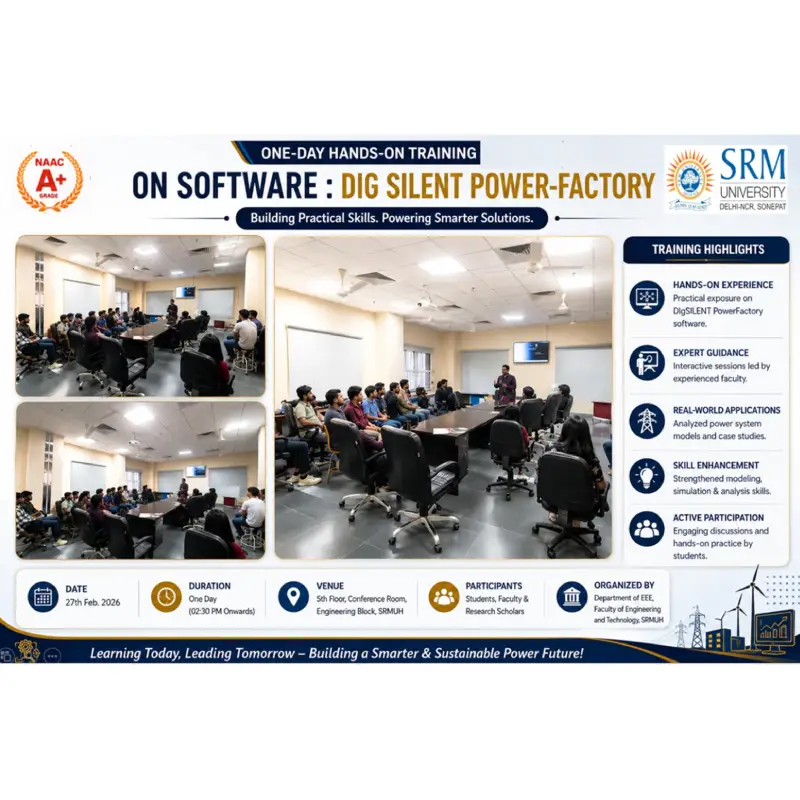
13 09-03-2026 One-Day Hands-on Training Report on Dig SILENT Power Factory, SRMUH 1 Day Centre of Excellence on Smart Grid and Data Analytics Dr. Deepika Yadav
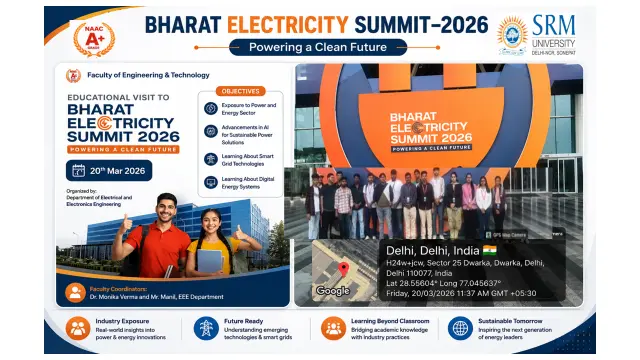
14 20-03-2026 Bharat Electricity Summit-2026 1 Day Renewable Energy Club Dr. Deepika Yadav
15 24-03-2026 Smart Micro-grid Operations Through AI Assisted Solar Power Integration 1 Day Dr. Suman Maity, IIT Kharagpur Dr. Deepika Yadav
16 15-04-2026 One Day Webinar on Demand Side Management of Micro-grid using Optimism Technique 1 Day Dr. Vivekananda Mukherjee, IIT Dhanbad Dr. Deepika Yadav
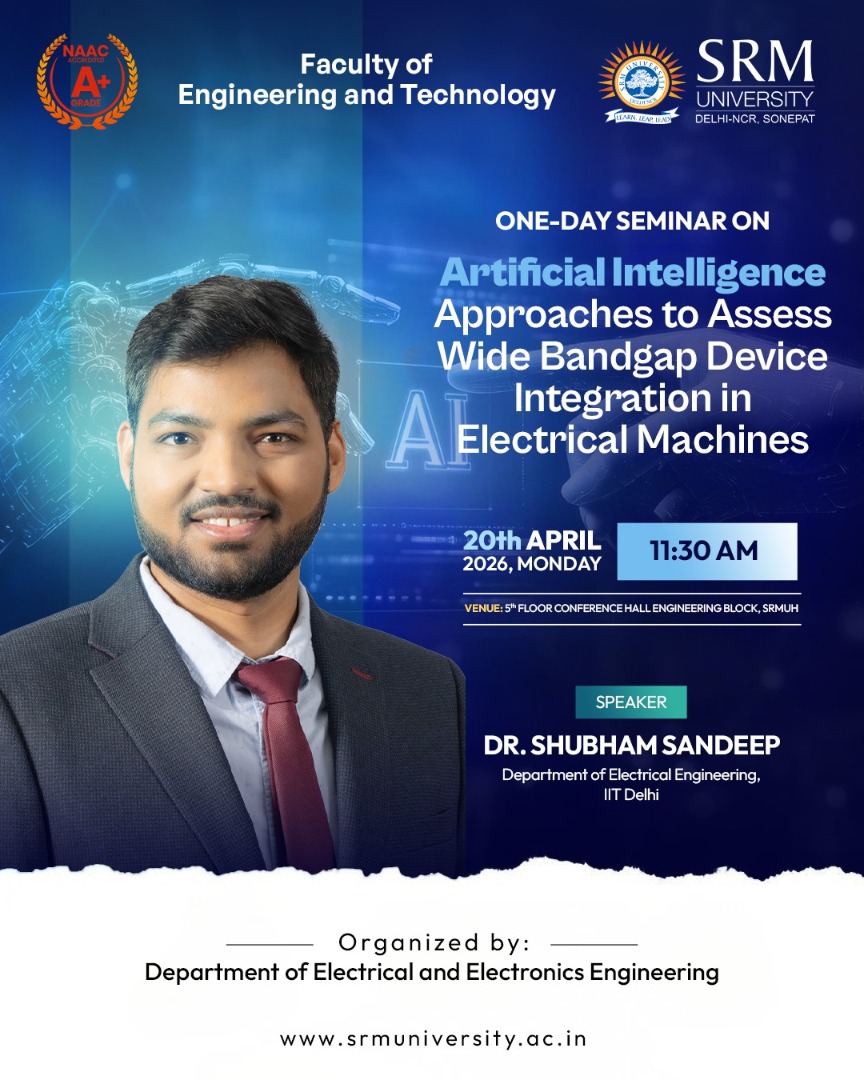
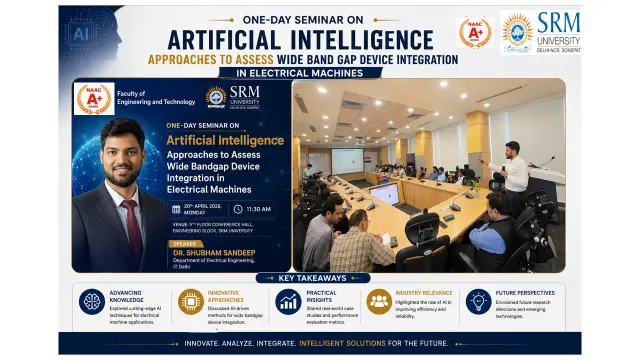
17 20-04-2026 Artificial Intelligence Approaches to Assess Wide Band Gap Device Integration in Electrical 1 Day Dr. Subham Sandeep, IIT Delhi Dr. Deepika Yadav
Courses Offered
APPLY NOW for academic year 2026-27

Know Our Faculty

Programme Overviews

Programme Educational Objectives (PEO)

  • PEO1: To develop competent Electrical and Electronics Engineering graduates capable of analyzing, designing, and developing innovative products and solutions to engineering problems that are technically sound, economically viable, and socially responsible.
  • PEO2: To equip graduates with strong fundamental and advanced knowledge in Electrical and Electronics Engineering, enabling them to excel in industry, entrepreneurship, higher education, teaching, and research.
  • PEO3: To nurture professionalism, ethical values, leadership qualities, and social responsibility, enabling graduates to address technical and societal challenges effectively.
  • PEO4: To enhance graduates’ communication, teamwork, and managerial skills, enabling them to organize, present, and disseminate technical information effectively in professional environments.
  • PEO5: To instill a commitment to lifelong learning, continuous professional development, and adaptability to emerging technologies and evolving engineering practices.

PROGRAM LEARNING OUTCOMES (PLOs)

  • PLO1. Engineering Knowledge and Skill: Apply the knowledge of mathematics, science, electrical engineering fundamentals, and an electrical engineering specialisation to the solution of complex electrical engineering problems.
  • PLO2. Problem Analysis: Identify, formulate, review research literature, and analyze complex electrical engineering problems reaching substantiated conclusions using first principles of mathematics, natural sciences and engineering sciences.
  • PLO3. Design and development of Solutions: Design solutions for complex electrical engineering problems and design system components or processes that meet the specified needs with appropriate consideration for the public health and safety, and the cultural, societal, and environmental considerations.
  • PLO4. Conduct investigations of complex problems: Use research-based knowledge and research methods including design of experiments, analysis and interpretation of data, and synthesis of the information to provide valid conclusions.
  • PLO5. Modern tool usage: Create, select, and apply appropriate techniques, resources, and modern engineering and IT tools, including prediction and modelling, to complex electrical engineering activities with an understanding of the limitations.
  • PLO6. The engineer and society: Apply reasoning informed by contextual knowledge to assess societal, health, safety, legal and cultural issues and the consequent responsibilities relevant to the professional engineering practice.
  • PLO7. Effective Communication: Communicate effectively on complex engineering activities with the engineering community and with society at large, such as, being able to comprehend and write effective reports and design documentation, make effective presentations, and give and receive clear instructions.
  • PLO8. Individual and team work: Function effectively as an individual, and as a member or leader in diverse teams, and in multidisciplinary settings.
  • PLO9. Life-long learning: Recognize the need for, and have the preparation and ability to engage in independent and life-long learning in the broadest context of technological change.
  • PLO10. Environment and sustainability: Understand the impact of professional electrical engineering solutions in societal and environmental contexts, and demonstrate the knowledge of, and need for sustainable development.
  • PLO11. Professional Ethics: Apply ethical principles and commit to professional ethics and responsibilities and norms of the engineering practice.
  • PLO12. Project management and finance: Demonstrate knowledge and understanding of engineering and management principles and apply these to one’s own work, as a member and leader in a team, to manage projects and in multidisciplinary environments.

Facilities

MATLAB

PSpice

LabVIEW

OrCAD

Multisim

Personality Development

Value Education

Department Happenings

Increase Text Decrease Text Dark Mode Light Mode Reset
SRMUH Third Convocation 2025