Introduction
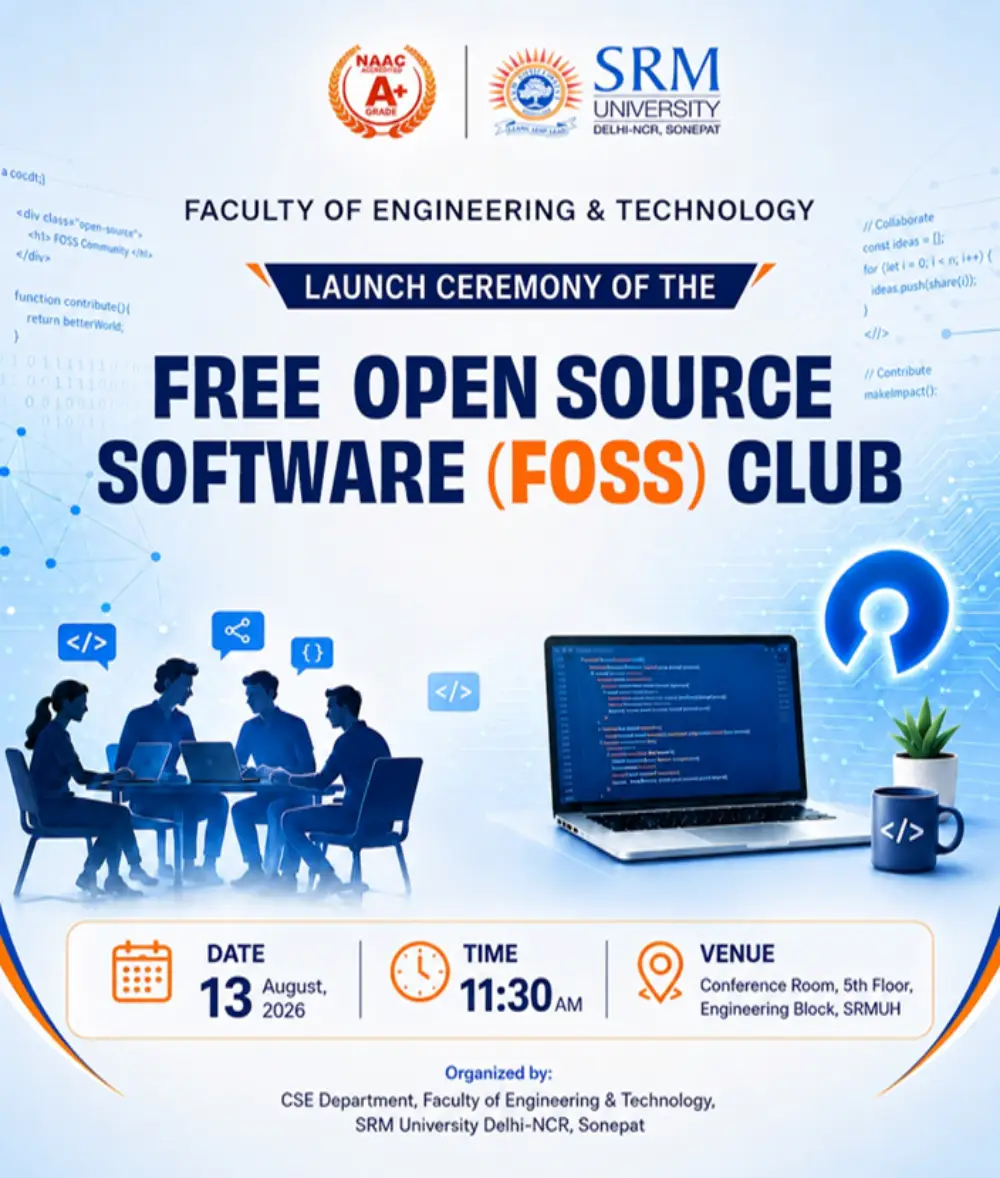
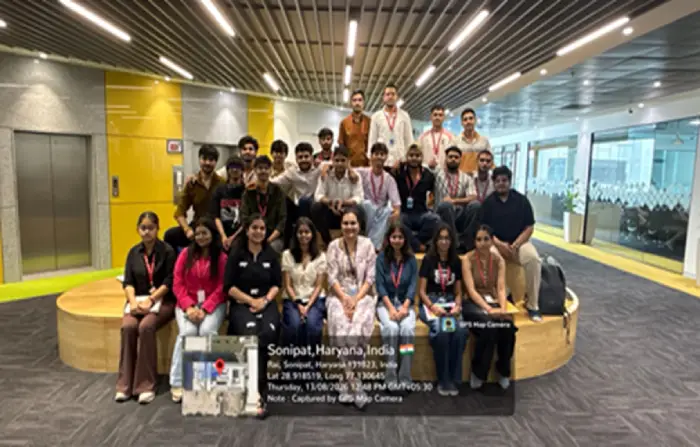
On 13th August 2026, the Department of Computer Science & Engineering, Faculty of Engineering & Technology, SRM University Delhi-NCR, Sonepat, organized the inaugural session of the Free Open Source Software (FOSS) Club. The session was conducted at the Conference Room, 5th Floor, Engineering Block, and brought together students and faculty members to introduce the vision, purpose, and opportunities associated with the newly established club.
The inaugural session focused on developing an open-source mindset among students—one that goes beyond simply using software. FOSS encourages learners to understand technology, experiment with it, collaborate with others, improve existing solutions, create new ones, and contribute back to the community. The session therefore emphasized a shift from classroom-only learning towards practical, collaborative, and contribution-oriented learning.
Objectives
- To introduce students to the concept, philosophy, and ecosystem of Free and Open Source Software (FOSS).
- To encourage learning through exploration, experimentation, collaboration, and contribution.
- To provide students with opportunities to work on practical and real-world technology projects beyond the classroom.
- To familiarize students with source code access, modification, redistribution, community participation, and open collaboration.
- To encourage students to build technical skills and a visible portfolio through projects, repositories, documentation, and contributions.
- To motivate students to participate in open-source communities, peer learning, coding activities, workshops, hackathons, and collaborative projects.
- To support students in developing teamwork, communication, problem-solving, version-control practices, and technical documentation.
Understanding Free and Open Source Software (FOSS)
FOSS stands for Free and Open Source Software. In this context, “free” refers primarily to freedom rather than price. The Free Software Foundation describes four essential freedoms: the freedom to run a program for any purpose, study how it works and modify it, redistribute copies, and distribute modified versions so that the wider community can benefit.
The Open Source Initiative explains that open-source software is made available under licenses that allow software to be accessed, used, changed, and shared, subject to the requirements of an approved open-source license. Open source therefore involves more than merely making source code visible; the licensing terms provide meaningful rights to use, modify, and redistribute the software.
FOSS is consequently not only a software model but also a culture of collaborative learning and development. It promotes transparency, peer review, knowledge sharing, distributed contribution, and community-driven improvement. These principles can help students learn how real software communities work and how technical contributions can be created and reviewed collaboratively.
FOSS Club at SRM University Delhi-NCR
The FOSS Club has been established with the vision of creating a student-driven platform where learners can move beyond consuming technology and begin understanding, creating, improving, and contributing to it. Through the club, students will get opportunities to explore modern technologies, work on real-world projects, collaborate with peers, learn from practitioners and communities, and contribute to the wider open-source ecosystem.
The club also aims to connect academic learning with practical skill development. Students can use open-source tools and platforms to experiment with ideas, develop projects, document their work, collaborate through version-control workflows, and gradually build a stronger technical profile. Such activities can complement classroom knowledge and provide evidence of practical abilities that may be valuable for internships, placements, research, higher studies, and technology-focused careers.
Key Highlights of the Inaugural Session
Introduction to the FOSS Vision
The session opened with an orientation to the philosophy and practical relevance of FOSS. Students were encouraged to view open source as a way of learning by doing—by exploring technologies, reading existing work, experimenting with implementations, and contributing improvements rather than limiting themselves to ready-made software consumption.
Address by Ms. Bhawna
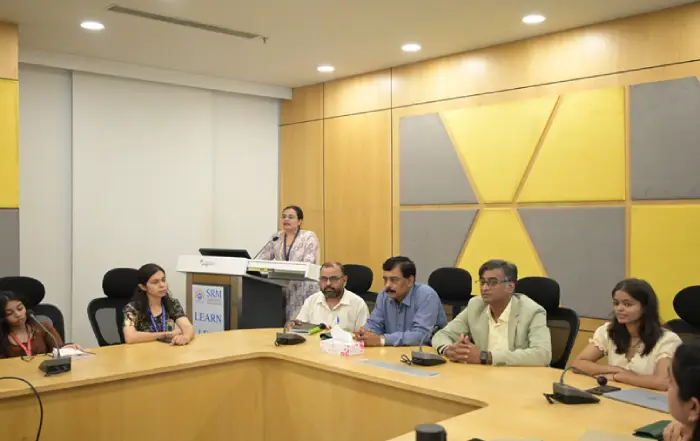
Ms. Bhawna, the expert/resource person, interacted with the students and explained how participation in open-source activities can strengthen both technical and professional abilities. She encouraged students to actively join the FOSS Club, take up projects, contribute to communities, and use the opportunities provided through the club to build practical experience. The discussion highlighted that consistent participation can help students develop stronger problem-solving abilities, collaborative working habits, technical confidence, and a demonstrable project profile.
Insights from the Vice Chancellor
The Hon’ble Vice Chancellor shared valuable insights on the importance of practical and future-oriented learning. The address emphasized the need for students to remain curious, continuously develop their skills, and make effective use of platforms that connect academic learning with real-world technological practices. The FOSS initiative was positioned as an opportunity for students to learn collaboratively and engage with contemporary technology ecosystems.
Guidance from the Dean Engineering & Technology
The Dean Engineering & Technology also shared insights on the relevance of open-source learning for CSE students and encouraged them to participate actively in the club. Students were motivated to make the most of the platform by working on meaningful projects, collaborating with peers, and converting their learning into practical outcomes.
Student Interaction and Engagement
A significant part of the session involved interaction between the students and the expert. Students listened to the presentation, discussed their interests, and engaged in questions and conversations related to open-source learning, projects, collaboration, and future opportunities. The interactive environment encouraged students to think about how they could participate in the club according to their interests and skill levels.
Expected Outcomes for Students
Conclusion
The inaugural session of the FOSS Club marked an important step towards strengthening practical, collaborative, and technology-driven learning among students at SRM University Delhi-NCR. The session successfully introduced the philosophy of FOSS and highlighted how open-source participation can help students learn, share, collaborate, create, and contribute. The guidance provided by the Hon’ble Vice Chancellor, Dean E&T, the Head of the Department, and Ms. Bhawna, along with the active interaction of students, created an encouraging foundation for the club’s future activities.
The FOSS Club is expected to provide a sustained platform for students to move beyond classroom learning, experiment with technology, work on real-world problems, develop visible project portfolios, and participate in the wider open-source community.